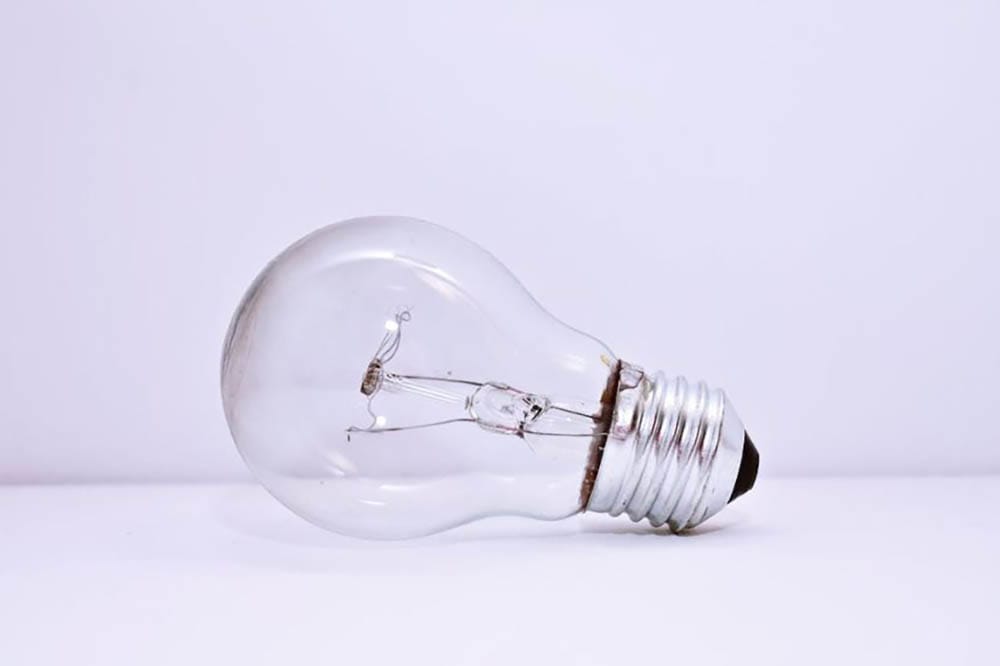
An 800-lumen light is about as bright as a traditional 60-watt incandescent bulb. A 1000-lumen light is a step brighter, sitting between the familiar brightness of an old 60-watt bulb and a 75-watt bulb.
That means 800 lumens can be enough for a table lamp, bedside lamp, hallway, closet, small room, or focused reading light. A 1000-lumen bulb gives you more output and can work better for a small room, task lamp, utility space, or brighter fixture.
But here is the important part:
Lumens tell you how much light a bulb produces. They do not tell you how much light actually reaches your desk, floor, countertop, or outdoor area.
The brightness you feel depends on the bulb, fixture, shade, beam angle, ceiling height, wall color, color temperature, CRI, distance, and whether the light is used for ambient lighting or task lighting.
Short Answer: 800 Lumens Is Like a 60W Bulb, 1000 Lumens Is a Step Brighter
If you are replacing an old incandescent bulb, this is the easiest comparison:
| Modern light output | Old incandescent comparison | Practical meaning |
|---|---|---|
| 450 lumens | About 40W incandescent | Soft lamp, accent light, low brightness |
| 800 lumens | About 60W incandescent | Common household bulb brightness |
| 1000 lumens | Between 60W and 75W incandescent | Brighter household bulb |
| 1100 lumens | About 75W incandescent | Stronger single-bulb output |
| 1600 lumens | About 100W incandescent | Bright bulb for larger areas or strong task lighting |
So, if you are used to a 60W bulb, an 800-lumen LED will feel familiar. If you want a little more brightness, choose around 1000 lumens.
800 Lumens vs 1000 Lumens: Quick Comparison
| Use case | 800 lumens | 1000 lumens |
|---|---|---|
| Bedside lamp | Usually good | Bright, better with shade or dimmer |
| Table lamp | Good for general use | Better for reading or task use |
| Desk lamp | Good if directed well | Stronger, watch for glare |
| Reading lamp | Often enough when close to the page | Better for older eyes or detailed reading |
| Hallway | Usually enough | Bright |
| Closet | Good for small closet | Better for larger closet |
| Small bedroom | Can work as one bulb, depending on fixture | Better single-bulb choice |
| Medium bedroom | Usually needs more than one source | May still need layered lighting |
| Living room | Good as one lamp, not enough alone | Good as one lamp, not enough alone |
| Kitchen | Not enough as the only light | Still usually not enough as the only light |
| Bathroom vanity | One light point, not full vanity plan | Useful, but CRI and placement matter |
| Laundry room | May be enough in small space | Better for visibility |
| Garage | Not enough alone | Useful as one fixture, but usually needs more |
| Porch light | Can be bright | Often very bright if exposed |
| Security light | Good for small area if aimed well | Better for small or medium area if shielded |
What Lumens Actually Mean
Lumens measure the total amount of visible light produced by a light source.
More lumens means more light output. Fewer lumens means less light output.
That makes lumens the best number to compare brightness between bulbs.
For example:
- 800 lumens is a common household bulb brightness.
- 1000 lumens is noticeably brighter than 800 lumens.
- 1600 lumens is much brighter and closer to an old 100W incandescent bulb.
Lumens are about light output, not energy use.
Lumens vs Watts
Watts measure energy use. Lumens measure brightness.
Older incandescent bulbs used more watts to produce the same amount of light. LED bulbs can produce the same brightness with much lower wattage.
| Old habit | Better way to think |
|---|---|
| “I need a 60W bulb.” | “I need about 800 lumens.” |
| “I need a 75W bulb.” | “I need about 1100 lumens.” |
| “I need a 100W bulb.” | “I need about 1600 lumens.” |
A 9W LED and a 60W incandescent can both produce around 800 lumens. The LED uses less energy, but the brightness can be similar.
When shopping, buy by lumens first, then check watts for energy use.
Lumens vs Lux and Footcandles
Lumens tell you how much light comes out of the bulb.
Lux and footcandles tell you how much light reaches a surface.
That difference matters.
A bulb can produce 1000 lumens, but if it is inside a thick shade, mounted high on the ceiling, aimed upward, or spread across a large room, the light reaching your desk may be much lower.
| Term | What it means | Simple explanation |
|---|---|---|
| Lumens | Total visible light output | How much light the bulb produces |
| Lux | Light reaching a surface, metric unit | Lumens per square meter |
| Footcandles | Light reaching a surface, imperial unit | Lumens per square foot |
| Watts | Energy used | Power consumption |
| Candela | Light intensity in a direction | Useful for flashlights and focused beams |
If you are lighting a whole room, lumens matter. If you are lighting a desk, countertop, or workbench, lux or footcandles matter more.
Why “800 Lumens Equals 800 Candles” Is Not the Right Explanation
It is common to hear that one lumen is like one candle, but that is too simplified.
A candle, candela, and lumen are not the same thing.
A candle sends light in many directions. A candela measures luminous intensity in a specific direction. A lumen measures total visible light output.
So it is better to say:
800 lumens is roughly the familiar brightness of a traditional 60W household bulb.
That comparison is more practical for homeowners.
Is 800 Lumens Bright Enough?
Yes, 800 lumens can be bright enough, depending on the use.
An 800-lumen bulb is usually enough for:
- a bedside lamp,
- a table lamp,
- a hallway fixture,
- a small closet,
- a small bedroom fixture,
- a reading lamp close to the page,
- a floor lamp used as one layer of light,
- a porch light if the fixture is not too shaded.
But 800 lumens is usually not enough as the only light source for:
- a medium or large living room,
- a full kitchen,
- a garage,
- a large bathroom,
- a workshop,
- a large basement,
- a large outdoor area.
The best use for 800 lumens is as one useful layer of light, not always the only light in a room.
800 Lumens for a Bedroom
An 800-lumen bulb can work well in a small bedroom, especially if the fixture is open or semi-open.
For a medium bedroom, one 800-lumen bulb may feel dim if it is the only light source. You may need:
- two bulbs,
- bedside lamps,
- a ceiling fixture with multiple bulbs,
- a floor lamp,
- task lighting,
- a dimmer.
For bedrooms, also consider color temperature. A warm 2700K or 3000K bulb usually feels more relaxing than a cool 5000K bulb.
800 Lumens for Reading
An 800-lumen lamp can be enough for reading if it is close to the book, properly shaded, and aimed at the page.
Placement matters.
An 800-lumen ceiling light may not be enough for reading in a chair across the room. An 800-lumen table lamp beside the chair can be much better.
For reading, look for:
- good lamp placement,
- low glare,
- shade that directs light downward,
- warm or neutral color temperature,
- enough contrast on the page,
- dimming if used at night.
800 Lumens for a Desk Lamp
800 lumens can work well for a desk lamp, especially for laptop work, writing, light reading, and general desk use.
If you do detailed work, drafting, sewing, model building, electronics, or craft work, 1000 lumens or more may be better.
Avoid bare bulbs aimed at your eyes or screen. Glare can make a bright lamp feel uncomfortable.
800 Lumens for Hallways and Closets
800 lumens is usually enough for many hallways, entries, and small closets.
For a larger walk-in closet, 1000 lumens or multiple fixtures may be better. If you need accurate clothing colors, choose CRI 90+.
Is 1000 Lumens Bright Enough?
Yes, 1000 lumens is noticeably brighter than 800 lumens. It can be a good choice when 800 lumens feels slightly dim.
1000 lumens is useful for:
- a brighter table lamp,
- a task lamp,
- a small room ceiling fixture,
- a closet,
- a laundry room,
- a bathroom fixture,
- a utility area,
- a small porch or outdoor light,
- one fixture among several in a garage or basement.
But 1000 lumens is still not automatically enough for an entire medium or large room. A kitchen, garage, living room, or basement often needs several light sources.
Is 1000 Lumens Too Bright?
Sometimes.
1000 lumens can feel too bright if:
- the bulb is exposed,
- the fixture has no shade,
- the lamp is close to your face,
- the room is small,
- the bulb is 5000K or cooler,
- the surface is glossy,
- the fixture points directly into your eyes,
- the light is used late at night.
If you are unsure, choose a dimmable bulb and a compatible dimmer, or use multiple lower-lumen lamps instead of one strong bulb.
1000 Lumens for a Small Room
A 1000-lumen bulb can work well as a main light for a small room, especially if the fixture spreads light evenly.
For a medium room, it may still feel underpowered as the only source. You may need layered lighting.
1000 Lumens for Task Lighting
1000 lumens is useful for:
- reading,
- craft work,
- desk work,
- laundry sorting,
- closet lighting,
- workbench lighting,
- bathroom grooming.
The main risk is glare. A 1000-lumen task lamp should be shaded, aimed properly, and positioned so it does not shine directly into the eyes.
1000 Lumens for Bathroom Lighting
A single 1000-lumen bulb can help in a bathroom, but bathroom lighting is more about placement than one bulb.
For vanity lighting, consider:
- lights on both sides of the mirror,
- CRI 90+,
- even face lighting,
- low glare,
- suitable damp-location rating,
- color temperature around 3000K to 4000K.
A bright ceiling bulb alone can cast shadows on the face.
Room-by-Room Lumen Guide
These are practical household guidelines, not strict code requirements. The right number depends on fixture style, room size, finishes, ceiling height, and personal preference.
| Room or area | 800 lumens | 1000 lumens | Better approach |
|---|---|---|---|
| Small bedroom | Can be enough | Better | Add bedside lamps if needed |
| Medium bedroom | Usually not enough alone | May still need layers | Use ceiling + lamps |
| Living room | Good as one lamp | Good as one lamp | Use several light sources |
| Kitchen | Not enough alone | Not enough alone | Use ceiling + task + under-cabinet lighting |
| Dining room | Can be one bulb in chandelier | Brighter single bulb | Use dimming for mood |
| Bathroom | Good as one source | Better | Use vanity placement and CRI 90+ |
| Hallway | Usually enough | Bright | Avoid glare |
| Closet | Good | Better | Use CRI 90+ for clothing color |
| Laundry | May be enough if small | Good | Add more if room is larger |
| Basement | Usually not enough alone | One useful source | Use multiple fixtures |
| Garage | Not enough alone | One useful fixture | Use multiple high-output fixtures |
| Porch | Often enough | Can be very bright | Use shielded fixture |
| Patio | Depends on fixture | Depends on fixture | Use layered outdoor lighting |
| Security light | Small area | Small/medium area | Aim and shield properly |
Why the Same Lumens Can Look Different
Two 800-lumen bulbs can feel different. Two 1000-lumen bulbs can feel different too.
The number on the package is only part of the story.
Beam Angle
Beam angle affects how concentrated the light feels.
| Beam type | Effect |
|---|---|
| Narrow beam | Brighter on one spot, less spread |
| Wide beam | Softer and more even, less intense in one spot |
| Diffused bulb | More comfortable, less harsh |
| Bare bulb | Can feel glaring even at lower lumens |
A 1000-lumen spotlight can feel intense. A 1000-lumen shaded lamp can feel softer.
Lampshades and Fixture Loss
A lampshade, frosted globe, recessed trim, or dirty lens can reduce usable light.
An 800-lumen bulb inside a dark fabric shade may feel much dimmer than an 800-lumen bare bulb.
Fixture losses come from:
- shade material,
- frosted glass,
- lens thickness,
- fixture direction,
- recessed cans,
- dirt and dust,
- enclosed globes,
- dark fixture interiors.
If a bulb looks dim, the fixture may be the reason.
Ceiling Height
Higher ceilings spread light over a larger area. A bulb that works in an 8-foot room may feel weaker in a room with 10-foot or 12-foot ceilings.
For high ceilings, consider:
- more lumens,
- more fixtures,
- downlights,
- pendant lights,
- task lighting,
- layered lighting.
Wall and Ceiling Color
Light surfaces reflect more light. Dark surfaces absorb more light.
An 800-lumen bulb in a white room may feel brighter than a 1000-lumen bulb in a dark room with matte walls, dark wood, or heavy shades.
Color Temperature
Color temperature changes how light feels.
A 5000K 800-lumen bulb may look crisper than a 2700K 800-lumen bulb, but both can produce the same lumen output.
Common choices:
| Color temperature | Appearance | Best uses |
|---|---|---|
| 2700K | Warm, cozy | Bedroom, living room, dining |
| 3000K | Warm white | General home lighting |
| 3500K | Balanced neutral warm | Kitchen, bath, office |
| 4000K | Neutral white | Kitchen, laundry, office, garage |
| 5000K | Daylight/cool white | Garage, workshop, task areas |
Choose color temperature for mood and use, not for brightness.
CRI
CRI, or Color Rendering Index, describes how accurately colors appear under a light.
CRI does not make a bulb brighter, but it affects how natural the room looks.
Choose:
- CRI 80+ for general use,
- CRI 90+ for kitchens, bathrooms, closets, art, crafts, makeup, and laundry.
An 800-lumen CRI 90 bulb may make colors look better than a 1000-lumen CRI 80 bulb.
Dimming
Dimming gives flexibility.
If 800 lumens feels too low during tasks and 1000 lumens feels too bright at night, choose a dimmable bulb with a compatible dimmer.
Check the bulb packaging. Not every LED bulb is dimmable.
Enclosed Fixture Compatibility
LED bulbs can overheat in enclosed fixtures if they are not rated for that use.
Before placing an 800-lumen or 1000-lumen LED in a globe, ceiling fan, porch fixture, or enclosed outdoor fixture, check the label for:
- enclosed fixture rating,
- damp or wet location rating,
- dimmable compatibility,
- base type,
- operating temperature,
- fixture orientation limits.
Using the wrong bulb can shorten life or cause failure.

Outdoor Lighting: Do Not Choose by Lumens Alone
Outdoor lighting should not follow the rule “brighter is always better.”
A well-aimed, shielded 800-lumen light can be more useful than a glaring 2000-lumen floodlight aimed into your neighbor’s window or into your own eyes.
Good outdoor lighting should be:
- aimed downward,
- shielded,
- motion-controlled where useful,
- bright enough but not excessive,
- placed where visibility is needed,
- selected with the right beam angle,
- not shining into windows,
- not creating glare for drivers or neighbors.
800 vs 1000 Lumens for Security Lights
For a small porch, side door, shed entry, or short walkway, 800 lumens can be enough.
For a small driveway area, backyard zone, or larger entry area, 1000 lumens may work better.
But the important factors are:
- placement,
- aiming,
- shielding,
- beam spread,
- motion sensor coverage,
- camera exposure,
- distance to target,
- glare control.
More lumens can help, but excessive glare can hide details instead of revealing them.
Flashlights and Camping Lanterns
For flashlights and lanterns, lumens are useful, but not enough.
Flashlights
A flashlight’s performance depends on:
- lumens,
- candela,
- beam distance,
- hotspot,
- spill,
- reflector design,
- battery type,
- runtime,
- thermal step-down,
- water resistance.
A 1000-lumen flood flashlight may light up a wide nearby area. A lower-lumen flashlight with higher candela may reach farther.
Camping Lanterns
A camping lantern spreads light in many directions. An 800-lumen lantern can be very bright inside a tent or small campsite.
For camping, look for:
- adjustable brightness,
- low mode,
- warm mode,
- red mode if needed,
- long runtime,
- USB charging or replaceable batteries,
- weather resistance,
- stable base or hanging hook.
1000 lumens inside a tent can be too bright without dimming.
How to Estimate Lumens for a Room
A simple estimate:
Room square footage × target footcandles = approximate lumens needed
Example:
A 10 ft × 12 ft room is 120 square feet.
If you want about 20 footcandles:
120 × 20 = 2400 lumens
That does not mean you need one 2400-lumen bulb. It may be better to use:
- three 800-lumen bulbs,
- two 1000-lumen bulbs plus a lamp,
- one ceiling fixture and task lights,
- layered lighting with dimming.
Then adjust for:
- dark walls,
- high ceilings,
- fixture shades,
- task needs,
- older eyes,
- glare control,
- room layout.
Layered Lighting Works Better Than One Bright Bulb
A room usually feels better with layers of light.
The three basic layers:
| Layer | Purpose | Example |
|---|---|---|
| Ambient lighting | General room brightness | Ceiling fixture, recessed lights, floor lamp |
| Task lighting | Focused light for activity | Desk lamp, reading lamp, under-cabinet light |
| Accent lighting | Mood and visual interest | Wall sconce, picture light, shelf lighting |
Instead of asking, “Is 1000 lumens enough for my living room?” ask:
- How large is the room?
- What tasks happen there?
- How many light sources are there?
- Is the light direct or diffused?
- Do I need dimming?
- Do I need warm, neutral, or cool light?
- Do I need high CRI?
Buying Checklist
Before choosing 800 or 1000 lumens, check:
- Lumens: 800, 1000, or another output
- Watts: energy use, not brightness
- Color temperature: 2700K, 3000K, 4000K, 5000K
- CRI: 80+ general, 90+ color-sensitive spaces
- Dimmable: yes or no
- Dimmer compatibility: required for LEDs
- Beam angle: narrow, medium, or wide
- Fixture type: table lamp, ceiling fixture, recessed can, outdoor fixture
- Enclosed fixture rating: required for enclosed globes
- Damp/wet rating: required for bathrooms/outdoor areas
- Base type: E26, E12, GU10, pin base, etc.
- Shape: A19, BR30, PAR38, globe, candle, tube
- Smart features: tunable white or dimming
- Warranty and certification
- Number of bulbs needed

Common Mistakes to Avoid
Mistake 1: Buying by Watts
Watts measure energy use. Lumens measure brightness.
Mistake 2: Thinking 1000 Lumens Is Always Enough for a Room
1000 lumens may be enough for a small room or one fixture, but not for every room.
Mistake 3: Using One Bright Bulb Instead of Several Layers
Several moderate lights often feel better than one harsh bright bulb.
Mistake 4: Ignoring Fixture Loss
Shades, globes, lenses, and recessed trims can reduce usable light.
Mistake 5: Ignoring Beam Angle
A narrow beam and wide beam with the same lumens can feel very different.
Mistake 6: Choosing Outdoor Lights Only by Lumens
Outdoor lights need proper aim, shielding, motion control, and glare control.
Mistake 7: Ignoring Color Temperature
A 5000K bulb may feel brighter or harsher than a 2700K bulb with the same lumens.
Mistake 8: Ignoring CRI
For kitchens, bathrooms, closets, art, and makeup, CRI can matter as much as brightness.
Mistake 9: Forgetting Dimming
A 1000-lumen bulb can be too bright at night if it cannot dim.
Mistake 10: Using the Wrong Bulb in an Enclosed Fixture
Always check whether the LED bulb is rated for enclosed fixtures.
FAQ About 800 and 1000 Lumens
Is 800 lumens bright?
Yes. 800 lumens is a common household brightness, roughly similar to a traditional 60W incandescent bulb.
Is 1000 lumens bright?
Yes. 1000 lumens is noticeably brighter than 800 lumens and works well for task lighting, small rooms, and brighter lamps.
Is 800 lumens enough for a bedroom?
It can be enough for a small bedroom, but medium or large bedrooms usually need more than one light source.
Is 1000 lumens too bright for a bedroom?
It can be bright if the bulb is exposed or cool-colored. With a shade or dimmer, it can work well.
Is 800 lumens enough for reading?
Yes, if the lamp is close to the page and aimed properly. A ceiling light with 800 lumens may not be enough for reading across the room.
Is 1000 lumens good for a desk lamp?
Yes, but use a shade or adjustable arm to prevent glare.
How many watts is 800 lumens?
A traditional incandescent bulb uses about 60 watts for around 800 lumens. An LED may use around 8 to 10 watts for similar output, depending on efficiency.
How many watts is 1000 lumens?
It depends on bulb type. An LED may use much less energy than an incandescent bulb for the same lumen output.
Is 1000 lumens enough for a kitchen?
Usually not as the only light source. Kitchens often need multiple fixtures and task lighting.
Is 800 lumens enough for a living room?
It is enough for one lamp, but usually not enough for the whole living room.
Is 1000 lumens enough for a bathroom?
It can help, but bathroom lighting depends heavily on mirror placement, CRI, fixture layout, and glare control.
Is 800 lumens enough outdoors?
It can be enough for a porch, side door, or small patio area. It may not be enough for a large yard or driveway.
Is 1000 lumens good for a security light?
It can be good for a small or medium area if aimed and shielded properly. More lumens are not always better.
What is the difference between lumens and lux?
Lumens measure total light output from the bulb. Lux measures how much light reaches a surface.
What is the difference between lumens and footcandles?
Lumens measure source output. Footcandles measure light landing on one square foot of surface.
Why does my 800-lumen bulb look dim?
The shade, fixture, wall color, beam angle, ceiling height, or color temperature may be reducing the perceived brightness.
Does color temperature affect brightness?
Not actual lumen output. But cooler color temperatures like 4000K or 5000K may appear crisper than warm 2700K light.
Do lampshades reduce lumens?
They reduce usable light reaching the room. A dark shade can make a bright bulb feel dim.
Should I choose 800 or 1000 lumens?
Choose 800 lumens for familiar household brightness. Choose 1000 lumens if you want a stronger bulb for tasks, small rooms, or brighter fixtures.
Conclusion
800 lumens is bright enough for many everyday household uses. It is roughly the familiar brightness of an old 60W incandescent bulb and works well for lamps, hallways, small bedrooms, closets, and reading lights when placed correctly.
1000 lumens is a step brighter. It is useful when 800 lumens feels slightly dim, especially for task lamps, small rooms, utility spaces, bathrooms, and some outdoor fixtures.
But lumens alone do not tell the whole story. The brightness you feel depends on the fixture, shade, beam angle, ceiling height, wall color, distance, color temperature, CRI, and whether the light is used for ambient or task lighting.
For the best result, do not choose lighting by one number. Choose lumens for output, watts for energy use, Kelvin for color appearance, CRI for color quality, and fixture layout for comfort.
Sources
- U.S. Department of Energy, Lumens and the Lighting Facts Label
- U.S. Department of Energy, Purchasing Energy-Efficient Light Bulbs
- FTC Consumer Advice, Shopping for Light Bulbs
- FTC, The Lighting Facts Label: Questions and Answers for Manufacturers
- ENERGY STAR, Light Bulb Purchasing Checklist
- ENERGY STAR, Light Bulb Purchasing Guide
- Lighting Design Lab, Footcandle Light Guide
- NIST, Candela
- DarkSky International, DarkSky Approved Outdoor Lighting
- U.S. Department of Energy, LED Color Characteristics Fact Sheet

 Shery