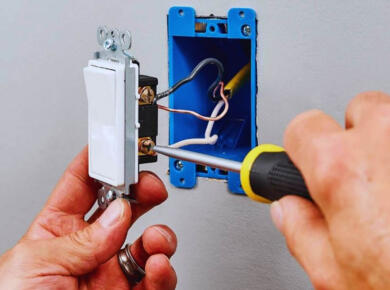
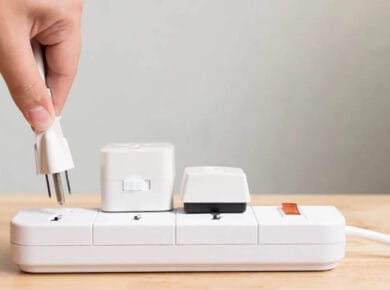
A 15 amp circuit can supply several outlets, but there is no single universal number that applies to every room, every home, and every situation.
Many homeowners hear that a 15 amp circuit should have no more than eight outlets. That number can be useful as a conservative rule of thumb, but it is not a universal residential limit. The safer question is not only “How many outlets can I install?” The better question is “What devices will be used, how much power will they draw, how long will they run, and what rules apply to that room?”
An outlet does not use power by itself. Power is used by the devices plugged into it. A 15 amp circuit with ten lightly used outlets may carry very little load. A 15 amp circuit with two outlets can overload quickly if someone plugs in a space heater and a hair dryer at the same time.
This guide explains how 15 amp circuits work, where the “eight outlets” idea comes from, how to estimate load, when a dedicated circuit is safer, and why breaker, wire, receptacle, and room requirements matter more than a simple outlet count.
Short Answer: There Is No Simple Universal Number
For a typical residential 15 amp general-purpose circuit, there is no simple NEC rule that says every 15 amp circuit is limited to exactly eight outlets.
A safer summary is:
- Eight outlets is a common rule of thumb, not a universal residential limit.
- Outlet count is less important than total electrical load.
- A 15 amp, 120 volt circuit has a theoretical capacity of 1,800 watts.
- For continuous loads, a common planning value is 1,440 watts.
- Room type matters because bedrooms, kitchens, bathrooms, laundry areas, garages, and workshops have different load patterns and code requirements.
- Local code and the authority having jurisdiction control the final installation.
The main principle is simple:
A 15 amp circuit is limited by load, not merely by the number of outlets on the wall.
Why People Often Say “Eight Outlets”
The “eight outlets” number usually comes from a simplified calculation.
The reasoning looks like this:
- A 15 amp circuit at 120 volts has a theoretical capacity of 1,800 watts.
- For continuous load planning, many people use 80 percent of the circuit rating.
- 15 amps × 80 percent = 12 amps.
- 12 amps × 120 volts = 1,440 watts.
- If each receptacle outlet is estimated at 180 VA, then 1,440 ÷ 180 = 8.
This calculation is useful as a conservative planning method. It is not the same as saying that every residential 15 amp circuit is legally limited to eight receptacles.
The important distinction is this:
The outlet does not automatically use 180 VA. The device plugged into the outlet creates the load.
A phone charger may draw 10 watts. A space heater may draw 1,500 watts. Treating every outlet as if it always uses the same amount of current can make the article easier to read, but it can also make the electrical explanation wrong.
Load Matters More Than Outlet Count
An outlet is only an access point to the circuit. It does not draw current until a device is plugged in and operating.
Compare these two examples:
| Scenario | Number of outlets used | Approximate load |
|---|---|---|
| Bedroom with lamps and chargers | 6 outlets | 100 to 300 watts |
| Room with one space heater | 1 outlet | About 1,500 watts |
| Home office with computer and monitors | 4 outlets | 400 to 900 watts |
| Bathroom with hair dryer | 1 outlet | 1,200 to 1,875 watts |
This is why counting outlets alone is not enough. A circuit with many low-power devices may be fine. A circuit with one high-power device may already be close to its practical limit.
15 Amp Circuit Basics
A 15 amp circuit is a branch circuit designed to carry up to 15 amps under the conditions allowed by code, conductor rating, breaker rating, device rating, and installation design.
In many U.S. homes, 15 amp general-purpose circuits are used for bedrooms, living rooms, hallways, lighting, and light-duty receptacle loads.
15 Amps at 120 Volts
The basic formula is:
Watts = Volts × Amps
For a 15 amp, 120 volt circuit:
120 volts × 15 amps = 1,800 watts
This is the theoretical maximum. It does not mean the circuit should be loaded to 1,800 watts continuously.
The 80 Percent Concept
The 80 percent concept is often misunderstood.
For standard-rated breakers, continuous loads should be planned more conservatively. A continuous load is generally a load expected to run for three hours or more.
For a 15 amp circuit:
15 amps × 80 percent = 12 amps
At 120 volts:
12 amps × 120 volts = 1,440 watts
This is why 1,440 watts is often used as a continuous-load planning number for a 15 amp circuit.
This does not mean a 15 amp circuit can never exceed 1,440 watts for a short period. It means loads that run continuously should be planned with more headroom.
Continuous vs Noncontinuous Loads
A continuous load is a load expected to run for three hours or longer.
Examples may include:
- aquarium heaters,
- grow lights,
- dehumidifiers,
- some server or network equipment,
- space heaters used for long periods,
- display lighting,
- ventilation fans,
- other equipment that runs for hours at a time.
A noncontinuous load runs for shorter periods. A vacuum cleaner, hair dryer, blender, or power tool may draw high current, but usually for a shorter time.
Both can overload a circuit, but continuous loads require more conservative planning.

Breaker, Wire, and Receptacle Must Match
A circuit is not defined only by the breaker handle. A safe circuit depends on the breaker, conductor size, receptacle rating, box, connections, and protection devices working together.
Common Wire Size for a 15 Amp Circuit
In many residential installations, a 15 amp branch circuit commonly uses 14 AWG copper conductors.
A 20 amp circuit commonly requires larger conductors, often 12 AWG copper in typical residential branch-circuit wiring.
Never assume the wire is correct just because the breaker says 15 or 20 amps. Older homes, modified circuits, and incorrect repairs can create unsafe conditions.
Do Not Replace a 15 Amp Breaker With a 20 Amp Breaker
Do not upgrade a 15 amp breaker to a 20 amp breaker unless a qualified electrician verifies that the entire circuit is suitable for 20 amps.
This includes:
- wire size,
- cable type,
- receptacle rating,
- box fill,
- device terminals,
- circuit length,
- protection requirements,
- installation conditions,
- local code.
Installing a larger breaker on undersized wire can allow the wire to overheat before the breaker trips. That is a fire hazard.
Residential vs Commercial Outlet Rules
The phrase “1.5 amps per outlet” is often repeated online, but it needs context.
Where the 1.5 Amp Idea Comes From
In many commercial or non-dwelling load calculations, receptacle outlets may be calculated at 180 volt-amperes per receptacle outlet or yoke, depending on the rule being applied.
At 120 volts:
180 VA ÷ 120 volts = 1.5 amps
That is where the 1.5 amp figure comes from.
Why It Is Not a Universal Residential Limit
Residential dwelling circuits are not always planned with the same simple receptacle-count method. In homes, the NEC often focuses on required outlet placement, required branch circuits, protection requirements, and room-specific rules.
That means this statement is too simplistic:
A 15 amp circuit can only have eight outlets.
A better statement is:
Eight outlets can be a conservative planning number, but residential 15 amp circuit design should be based on expected load, room type, required protection, and local code.
Outlet, Receptacle, Duplex Receptacle, and Yoke
Many people use the word “outlet” casually. Electrical terminology can be more precise.
Outlet
An outlet is a point on the wiring system where current is taken to supply equipment.
Receptacle Outlet
A receptacle outlet is an outlet where one or more receptacles are installed.
Receptacle
A receptacle is the contact device where a plug is inserted.
Duplex Receptacle
A duplex receptacle is the common device with two plug-in positions. Many people call this “one outlet,” but it contains two receptacles.
Yoke or Strap
The yoke is the mounting frame that holds the receptacle device.
This terminology matters because some electrical calculations refer to receptacle outlets, receptacles, or yokes. A homeowner article should avoid confusing “one wall device” with “one plug-in opening.”
15 Amp vs 20 Amp Receptacles
Receptacle rating is important because the receptacle shape affects what plugs can be connected.
15 Amp Receptacles on a 15 Amp Circuit
A 15 amp circuit normally uses 15 amp receptacles. This matches the circuit rating and prevents users from plugging in equipment that requires a 20 amp receptacle configuration.
20 Amp Receptacles on a 15 Amp Circuit
A 20 amp receptacle should not be installed on a 15 amp circuit as a normal homeowner practice. It can allow a 20 amp plug to be used on a circuit that is not designed for that load.
If you see a 20 amp receptacle on a 15 amp breaker, have the circuit checked by a licensed electrician.
15 Amp Receptacles on a 20 Amp Circuit
This is a different issue. In many residential situations, 15 amp duplex receptacles may be allowed on 20 amp circuits when the circuit has more than one receptacle and the wiring is suitable for 20 amps. That does not mean the reverse is safe.
The practical rule is:
Do not install a receptacle that invites a larger load than the circuit is designed to carry.
Room-by-Room Planning Guide
A 15 amp circuit may be suitable for some rooms and unsuitable for others. The room use matters because different rooms have different load profiles.
| Area | 15 amp circuit suitability | Notes |
|---|---|---|
| Bedroom | Often suitable for general-purpose loads | Lamps, chargers, clocks, and light electronics are usually low load. |
| Living room | Often suitable for light loads | Entertainment centers may need better planning. |
| Home office | Sometimes suitable | Computers, monitors, printers, and UPS units can add up. |
| Kitchen | Usually not for main countertop appliance circuits | Kitchen loads are high and often require 20 amp small-appliance circuits. |
| Bathroom | Often needs special circuit planning | Hair dryers and grooming appliances draw heavy current. |
| Laundry area | Usually special circuit planning | Laundry circuits often have specific requirements. |
| Garage | Use caution | Tools, freezers, chargers, and equipment can be high load. |
| Workshop | Often needs more than 15 amp general-purpose wiring | Motors and tools may need dedicated circuits. |
Bedrooms and Living Rooms
Bedrooms and living rooms often use relatively light loads.
Common devices include:
- lamps,
- phone chargers,
- clocks,
- small fans,
- TVs,
- laptop chargers,
- small speakers,
- streaming devices.
A 15 amp circuit may handle these loads well if the circuit is not shared with heavy appliances. However, bedrooms and living areas commonly require AFCI protection under modern code adoption, and receptacles may need to be tamper-resistant.
The main design concern is not just outlet count. It is whether the circuit is properly protected and whether the expected load is reasonable.
Home Offices
A home office can be light or heavy depending on equipment.
A small laptop desk may use very little power. A larger workstation can use much more.
Example home office load:
| Device | Estimated watts |
|---|---|
| Laptop charger | 90 W |
| Monitor | 60 W |
| Router and modem | 30 W |
| LED desk lamp | 10 W |
| Phone charger | 20 W |
| Total | 210 W |
This is usually manageable on a 15 amp circuit.
Now compare a heavier office:
| Device | Estimated watts |
|---|---|
| Desktop computer | 500 W |
| Two monitors | 160 W |
| Laser printer during warmup | 900 W |
| Network equipment | 60 W |
| Total during printer warmup | 1,620 W |
This can approach or exceed the continuous-load planning value and may cause nuisance trips if the circuit is shared with other rooms.
A dedicated 20 amp circuit may be worth considering for a heavy workstation, office with multiple computers, server rack, or large printer.
Kitchens
Kitchens should not be planned like bedrooms.
Kitchen devices often draw high power:
- toaster,
- microwave,
- air fryer,
- coffee maker,
- electric kettle,
- blender,
- stand mixer,
- toaster oven.
Many kitchen countertop receptacles are served by required small-appliance branch circuits, typically 20 amp circuits in modern U.S. residential practice. GFCI protection is commonly required in kitchen areas, and AFCI protection may also apply depending on code adoption.
A 15 amp general-purpose circuit is not the correct planning basis for main kitchen countertop appliance loads.
Bathrooms
Bathrooms also need special attention because water and high-current grooming devices are common.
A hair dryer alone may draw 1,500 watts or more. That is already close to the full theoretical capacity of a 15 amp circuit and above the 1,440 watt continuous-load planning value.
Bathroom receptacles commonly require GFCI protection. Many bathroom receptacle circuits are planned as 20 amp circuits because of grooming appliances.
Do not extend a general-purpose 15 amp circuit into a bathroom without verifying code requirements.
Laundry Areas
Laundry areas often have special circuit requirements. Washing machines, gas dryer controls, irons, steamers, and utility equipment can draw meaningful load.
An electric dryer typically requires its own 240 volt circuit. A laundry receptacle circuit should not be treated as an ordinary bedroom circuit.
Garages and Workshops
Garages and workshops are often poor candidates for overloaded 15 amp general-purpose circuits.
Common loads include:
- power tools,
- shop vacuum,
- air compressor,
- battery chargers,
- freezer,
- garage door opener,
- portable heater,
- work lights,
- small welder,
- pressure washer.
Motor loads and tool startup currents can be higher than expected. If a garage or workshop is used heavily, additional circuits or dedicated circuits may be safer than adding more outlets to an existing 15 amp circuit.
Receptacle Spacing vs Receptacle Count
Residential outlet rules often focus on minimum placement. The purpose is to make outlets available where they are needed so people do not rely on extension cords.
In general living areas, receptacles are commonly placed so that no point along the usable wall space is too far from a receptacle. This often results in receptacles spaced around the room.
That spacing rule is about minimum access and convenience. It is not the same as a maximum number of outlets on one circuit.
How to Estimate Load on a 15 Amp Circuit
To estimate load, list the devices that may run at the same time.
Use this formula:
Watts = Volts × Amps
If the device label lists amps, multiply amps by volts. If it lists watts, use watts directly.
Example 1: Light Bedroom Load
| Device | Watts |
|---|---|
| LED lamp | 10 W |
| Phone charger | 20 W |
| Alarm clock | 5 W |
| Laptop charger | 65 W |
| Small fan | 40 W |
| Total | 140 W |
This is a very light load for a 15 amp circuit.
Example 2: Moderate Living Room Load
| Device | Watts |
|---|---|
| TV | 150 W |
| Game console | 200 W |
| Soundbar | 60 W |
| Streaming device | 10 W |
| Wi-Fi router | 15 W |
| LED lamp | 10 W |
| Total | 445 W |
This is usually manageable if the circuit is not also serving heavy loads.
Example 3: Heavy Home Office Load
| Device | Watts |
|---|---|
| Desktop computer | 500 W |
| Monitor 1 | 80 W |
| Monitor 2 | 80 W |
| Laser printer during warmup | 900 W |
| Network equipment | 60 W |
| Total | 1,620 W |
This is a heavy load for a 15 amp circuit, especially if the printer, computer, and other devices operate together. A dedicated circuit may be better.
Example 4: Unsafe Load
| Device | Watts |
|---|---|
| Space heater | 1,500 W |
| Hair dryer | 1,500 W |
| Total | 3,000 W |
This exceeds the capacity of a 15 amp, 120 volt circuit. The breaker should trip, but relying on breaker trips as a planning method is unsafe.
When You Need a Dedicated Circuit
A dedicated circuit serves one appliance or one specific load. It prevents that load from sharing circuit capacity with unrelated devices.
A dedicated circuit may be needed or strongly preferred for:
- microwave,
- refrigerator or freezer,
- dishwasher,
- garbage disposal,
- washing machine,
- electric dryer,
- sump pump,
- large window air conditioner,
- space heater,
- treadmill,
- workshop equipment,
- laser printer or copier,
- server or network rack,
- bathroom heat appliance,
- garage freezer,
- EV charging equipment.
A dedicated circuit is often safer than adding more outlets to a circuit that is already close to its load limit.
Can Lights and Outlets Share a 15 Amp Circuit?
In some general-purpose residential areas, lights and receptacles may share a 15 amp circuit if local code allows and the circuit is properly designed.
However, this does not apply to every room. Kitchens, bathrooms, laundry areas, garages, and dedicated equipment circuits may have special rules. Required circuits for specific rooms or appliances may not be allowed to serve unrelated lighting or outlets.
If you are adding outlets or changing circuit use, check local code or call an electrician.
GFCI, AFCI, and Tamper-Resistant Receptacles
Outlet count is only one part of a safe installation. Modern receptacles may also require shock protection, fire protection, and child-safety features.
GFCI Protection
GFCI protection helps reduce shock risk by disconnecting power when a ground fault is detected.
GFCI protection is commonly required in areas such as:
- bathrooms,
- kitchens,
- garages,
- outdoors,
- basements,
- laundry areas,
- wet or damp locations.
AFCI Protection
AFCI protection helps reduce fire risk from arcing faults. It is commonly required on many 15 amp and 20 amp dwelling branch circuits in living areas, bedrooms, dining rooms, kitchens, hallways, laundry areas, and similar rooms, depending on the adopted code.
Tamper-Resistant Receptacles
Tamper-resistant receptacles include internal shutters that help prevent foreign objects from being inserted into the slots. They are commonly required in dwelling units.
A safe 15 amp circuit is not only about how many outlets it has. It is also about the right protection for the location.
Should You Add More Outlets to an Existing 15 Amp Circuit?
Adding outlets is not just a matter of connecting one more receptacle to an existing box. It can involve code, safety, and installation details that are easy to overlook.
Before adding outlets, consider:
- existing circuit load,
- wire size,
- breaker size,
- box fill,
- GFCI requirements,
- AFCI requirements,
- tamper-resistant requirements,
- grounding,
- polarity,
- cable support,
- wall construction,
- local permit rules,
- whether the circuit already serves multiple rooms,
- whether a dedicated circuit is better.
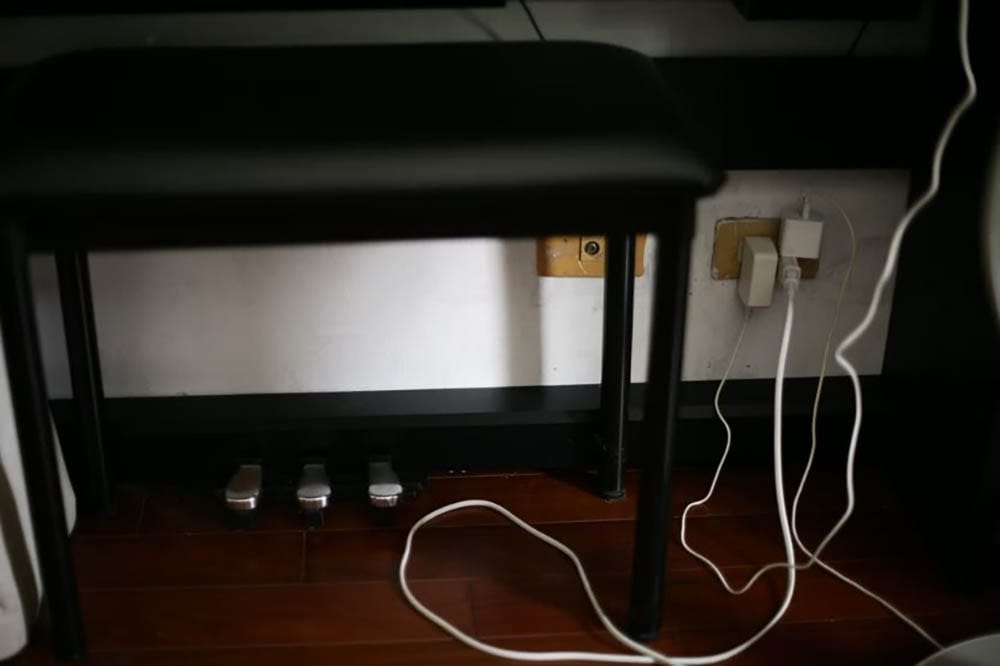
If the reason for adding outlets is that you are using too many power strips or extension cords, the best solution may be a new circuit, not more outlets on the same old circuit.
Why a Quick DIY Outlet Addition Can Be Risky
Adding an outlet can look simple, but hidden conditions matter.
Possible problems include:
- older wiring,
- aluminum wiring,
- multi-wire branch circuits,
- shared neutrals,
- overfilled electrical boxes,
- damaged insulation,
- backstabbed connections,
- missing ground,
- mixed circuit wiring,
- incorrect breaker size,
- missing GFCI or AFCI protection,
- unpermitted previous work.
A basic article cannot verify what is inside your wall. If you are not trained to test, calculate, and inspect the circuit, hire a licensed electrician.
Common Mistakes to Avoid
Mistake 1: Treating Eight Outlets as a Universal Code Limit
Eight outlets may be a conservative planning number, but it is not a universal residential NEC maximum for every 15 amp circuit.
Mistake 2: Thinking Each Outlet Always Uses 1.5 Amps
An outlet does not use current by itself. The device plugged into it creates the load.
Mistake 3: Ignoring High-Wattage Devices
A single heater, hair dryer, microwave, or power tool can use more electricity than several small electronics combined.
Mistake 4: Replacing a 15 Amp Breaker With a 20 Amp Breaker
Never increase breaker size unless the wiring and the entire circuit are verified for the higher rating.
Mistake 5: Installing a 20 Amp Receptacle on a 15 Amp Circuit
This can invite use of 20 amp equipment on a circuit designed for 15 amps.
Mistake 6: Using Extension Cords as Permanent Wiring
If you need extension cords every day, install additional receptacles or circuits properly.
Mistake 7: Ignoring GFCI and AFCI Requirements
Shock and fire protection requirements matter. Outlet count does not override safety protection.
Mistake 8: Treating Kitchens and Bathrooms Like Bedrooms
Kitchens and bathrooms have special loads and safety requirements. They should not be planned with a simple bedroom-style outlet count.
Mistake 9: Skipping Load Calculation
Before adding outlets, estimate what will actually be plugged in and used at the same time.
Mistake 10: Continuing to Reset a Tripping Breaker
A breaker that trips repeatedly is warning you about overload or a fault. Do not keep resetting it without finding the cause.
Safety Checklist Before Adding Outlets to a 15 Amp Circuit
Before adding outlets or increasing use of a 15 amp circuit, ask these questions:
- Is this definitely a 15 amp circuit?
- Is the wire size suitable for the breaker?
- Is the breaker correctly sized?
- Are the receptacles correctly rated?
- Is the circuit already serving other rooms?
- What devices will run at the same time?
- Will any load run for three hours or more?
- Is the total load below 1,440 watts for continuous use?
- Is the circuit serving a kitchen, bathroom, laundry, garage, or workshop?
- Is GFCI protection required?
- Is AFCI protection required?
- Are tamper-resistant receptacles required?
- Is box fill adequate?
- Is grounding present and correct?
- Are there signs of old or damaged wiring?
- Would a dedicated circuit be safer?
- Does local code require a permit or inspection?
If you cannot answer these questions confidently, do not modify the circuit yourself.
FAQ About Outlets on a 15 Amp Circuit
How many outlets can be on a 15 amp circuit?
There is no single universal number for every residential 15 amp circuit. Eight outlets is a common rule of thumb, but the practical limit depends on expected load, room type, circuit design, protection requirements, and local code.
Is eight outlets the NEC limit for a 15 amp circuit?
No. Eight outlets is usually a conservative planning estimate, not a universal NEC maximum for residential general-purpose circuits.
Why do people say each outlet is 1.5 amps?
The 1.5 amp idea comes from 180 VA per receptacle outlet divided by 120 volts. This is useful in certain load calculation contexts, especially commercial planning, but it does not mean every outlet in a home automatically uses 1.5 amps.
How many watts can a 15 amp circuit handle?
At 120 volts, a 15 amp circuit has a theoretical capacity of 1,800 watts. For continuous loads, a common planning number is 1,440 watts.
What is the 80 percent rule?
For standard-rated breakers, continuous loads are commonly planned at about 80 percent of the breaker rating. On a 15 amp circuit, that means about 12 amps, or 1,440 watts at 120 volts.
Can I put 20 amp outlets on a 15 amp circuit?
No, not as a normal homeowner practice. A 20 amp receptacle can allow a 20 amp plug on a circuit designed for only 15 amps.
What wire size is used for a 15 amp circuit?
In many residential applications, 15 amp circuits commonly use 14 AWG copper conductors. A qualified electrician should verify the actual wiring before any modification.
Can I replace a 15 amp breaker with a 20 amp breaker?
No. Do not replace a 15 amp breaker with a 20 amp breaker unless a qualified electrician confirms that the entire circuit is rated for 20 amps.
Can lights and outlets be on the same 15 amp circuit?
Sometimes, in general-purpose areas, if local code allows and the circuit is properly designed. Kitchens, bathrooms, laundry areas, garages, and dedicated circuits may have special rules.
Can a kitchen use a 15 amp circuit?
A kitchen may have some 15 amp lighting or other circuits, but countertop small-appliance receptacles are commonly served by required 20 amp circuits in modern residential practice. Do not plan kitchen appliance loads using a simple 15 amp outlet-count rule.
Should a bathroom outlet be 15 amp or 20 amp?
Bathroom receptacles often require special circuit planning and GFCI protection. Many bathroom receptacle circuits are 20 amp because grooming appliances can draw heavy current. Check local code.
Can I add an outlet to an existing 15 amp circuit?
Possibly, but only if the circuit can safely support the added load and the installation meets code. Adding an outlet can involve box fill, GFCI/AFCI protection, grounding, permits, and inspection.
What happens if a 15 amp circuit is overloaded?
The breaker should trip. If it trips repeatedly, reduce the load and investigate the cause. Do not keep resetting a tripping breaker without solving the problem.
Is it better to add more outlets or add another circuit?
If the issue is convenience and the load is light, adding outlets may help. If the issue is high load, adding another circuit or a dedicated circuit may be safer.
Do I need an electrician?
If you are adding outlets, changing breakers, extending circuits, or dealing with kitchens, bathrooms, garages, laundry areas, old wiring, or unknown wiring, hire a licensed electrician.
Conclusion
There is no single universal answer to how many outlets can be on a 15 amp circuit. The common answer of eight outlets is a rule of thumb, not a universal residential code limit.
A 15 amp, 120 volt circuit has a theoretical capacity of 1,800 watts. For continuous loads, a common planning value is 1,440 watts. The real limit depends on what devices are used, how long they run, where the circuit is located, whether the load is continuous, and what local code requires.
For bedrooms and living rooms, a 15 amp circuit may be suitable for light general-purpose loads. For kitchens, bathrooms, laundry areas, garages, workshops, and high-power equipment, a 15 amp circuit may not be enough or may not be the correct circuit type.
Do not plan a circuit by outlet count alone. Estimate the load, match the breaker, wire, and receptacle rating, include required GFCI and AFCI protection, and call a licensed electrician when the design is unclear.
Sources
- NFPA, Understanding NFPA 70, National Electrical Code
- Jade Learning, How Many Receptacle Outlets Can You Install on One Circuit?
- Schneider Electric, What Is the Difference Between an 80 Percent Rated Breaker and a 100 Percent Rated Breaker?
- Mike Holt, Branch Circuits, Based on the 2023 NEC
- Mike Holt, Dwelling Unit Receptacle Outlets and General-Purpose Circuits
- Electrical Safety Foundation International, What Is a Tamper Resistant Receptacle?
- Electrical Safety Foundation International, Types of Tamper-Resistant Receptacles
- Electrical Safety Foundation International, Ground Fault Circuit Interrupters, GFCI
- Leviton, GFCI and Tamper-Resistant Receptacles for a Safer Home
- ExpertCE, Can You Put a 20A Receptacle on a 15A Circuit? NEC Explanation


 Shery